


In the heart of the Arabian Peninsula, water is not merely a resource; it is a miracle. Beyond the undulating dunes and stark, jagged peaks of the Hajar Mountains lie Oman’s hidden sanctuaries. These oases and wadis are not just places to swim or rest—they are the pulsing lifeblood of the desert.
Journey with us across the diverse regions of the Sultanate, discovering verdant palm groves, ancient Aflaj irrigation channels, and emerald pools that have nurtured Omani civilization for millennia.
Al Batinah & North Oman
Where the majestic Hajar Mountains meet the coastal plains, the Al Batinah region guards some of the nation's most historically significant and thermally active oases.
Nakhal Oasis
Cradled beneath an imposing fortress, the Nakhal Oasis is famous for its Ain A'Thawwarah hot springs. Here, mineral-rich thermal waters bubble up from the earth year-round, feeding endless plantations of date palms. The juxtaposition of the rugged fortress and the tranquil, warm streams creates an atmosphere of ancient, fortified peace.
Rustaq Oasis
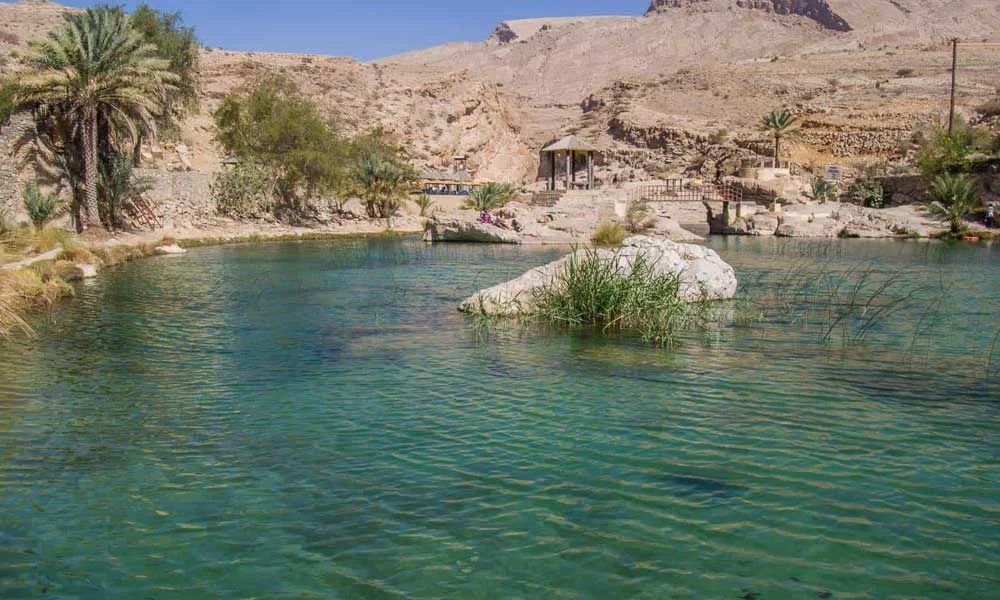
Once the capital of Oman, Rustaq remains a deeply traditional sanctuary. Its oasis is nourished by sophisticated ancient falaj systems that sustain sweeping groves of citrus and palm. The therapeutic Ain Al Kasfa springs offer naturally hot waters, revered by locals for their healing properties against the backdrop of historical ruins.

"An oasis is a mirror of heaven in the vastness of the desert sands. To find it is to understand the poetry of patience."
— Ancient Arabian Proverb
Ad Dakhiliyah (The Interior)
The cultural and historical heartland of Oman. Protected by the highest peaks of the Jabal Akhdar range, the interior holds the country’s most storied and lush oases.
Nizwa Oasis
Known as the 'Pearl of Islam', Nizwa's colossal fort looks out over an ocean of date palms spanning over 8 kilometers. Sustained by the Falaj Daris (the largest in Oman and a UNESCO World Heritage site), the oasis breathes life into the city's vibrant silver souqs and ancient alleyways.
Bahla Oasis
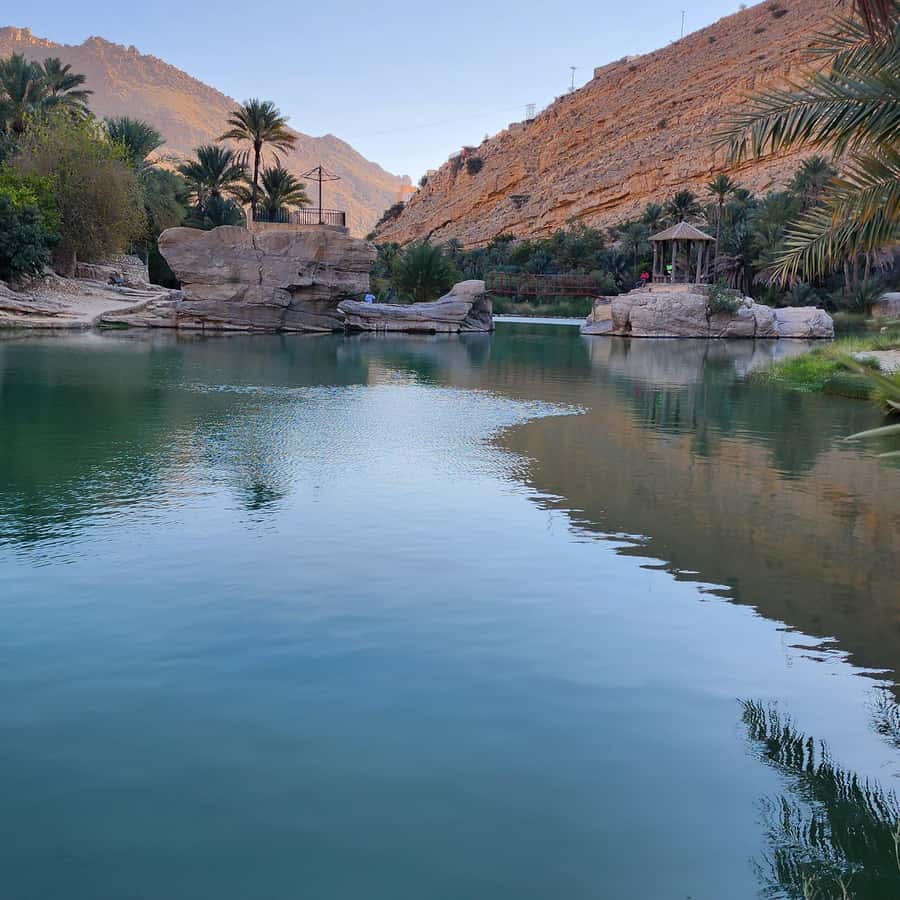
Shrouded in myth and legends of mysticism, Bahla is surrounded by a 12-kilometer defensive wall. Its oasis fuels centuries-old pottery traditions, with the rich earth and flowing water creating a living museum of Omani artisanship.
Al Hamra Oasis
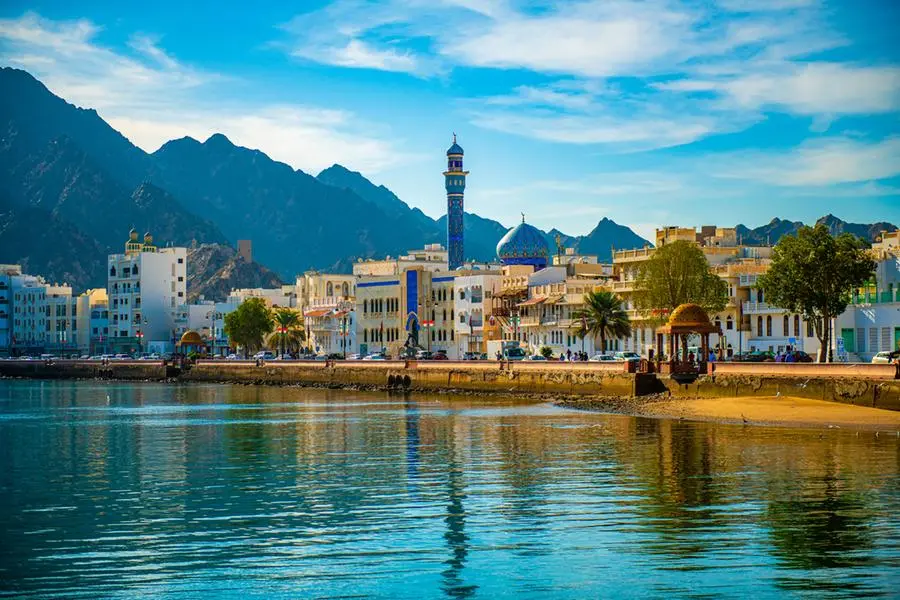
Nestled at the foothills of the mountains, Al Hamra features multi-story mudbrick houses that overlook stepped terraces. The falaj water weaves through banana plants and date palms, reflecting the amber hues of the fading afternoon sun.
Birkat Al Mouz & Tanuf
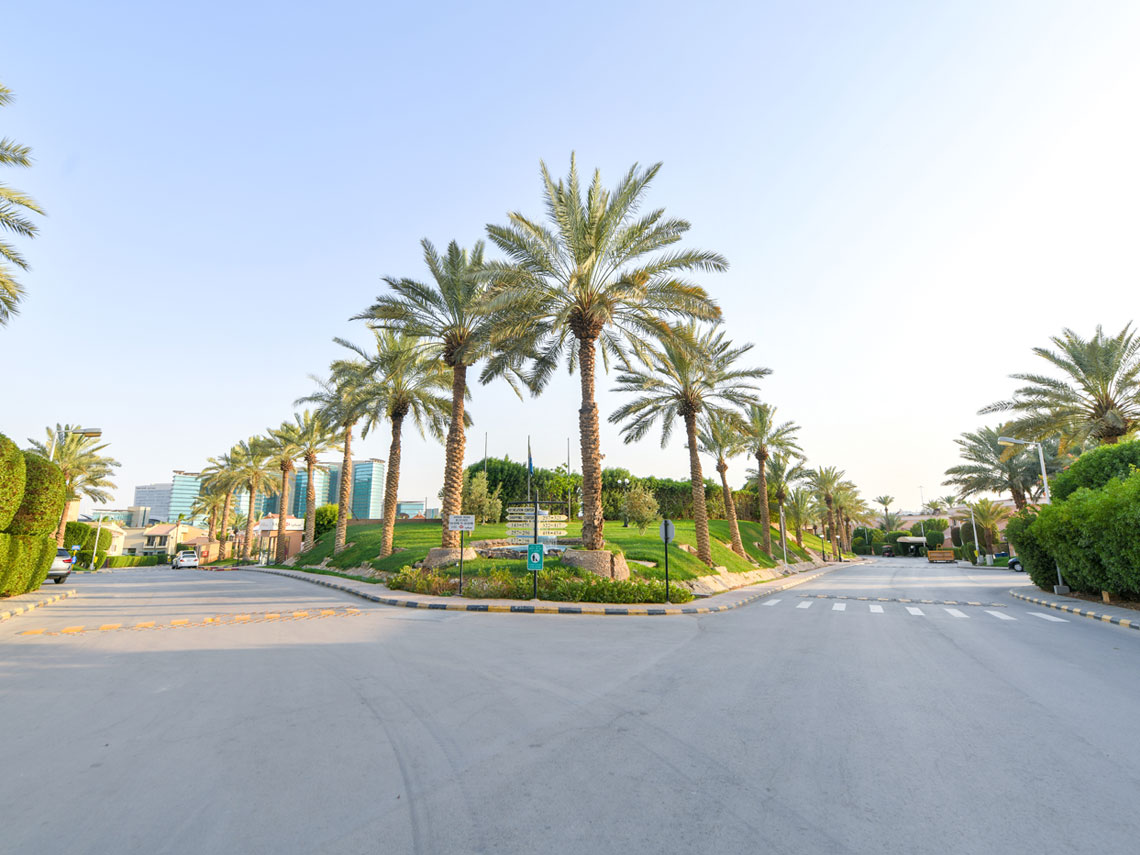
Birkat Al Mouz translates to 'Pool of Bananas'. It serves as the gateway to the Sayq Plateau, offering breathtaking views of crumbling clay ruins surrounded by thriving, vibrant agriculture. Nearby, the hauntingly beautiful ruins of the Tanuf Oasis stand as a testament to history, backdropped by waterfalls that spring to life after mountain rains, supplying the region with pristine mineral water.

"In the desert, there is no greater wealth than a drop of water. It is the architect of life."
— Bedouin Saying
Ash Sharqiyah Region
Resting on the precipice of the vast Wahiba Sands, the Sharqiyah region offers a stunning contrast: the harsh, golden infinity of the desert colliding with the spectacular, year-round emerald pools of the wadis.
Ibra Oasis
Ibra serves as the historical gateway to the Eastern Desert. Its lush, sprawling oasis was built by prosperous merchants centuries ago. Walking through the abandoned, yet immaculately constructed mud-brick mansions of Al Minzafah within the oasis offers a poignant glimpse into Oman’s trading golden age.
Wadi Bani Khalid
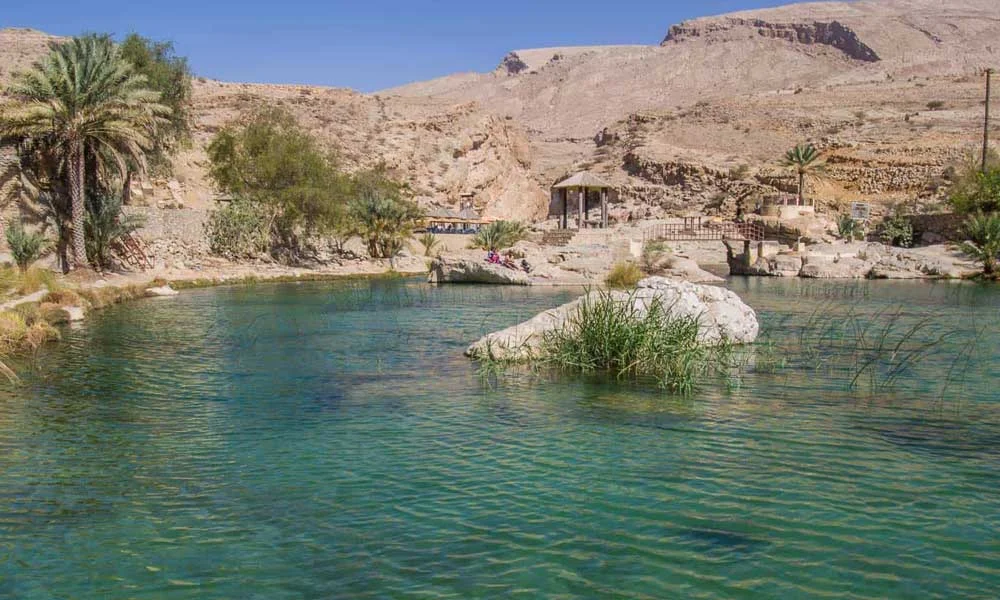
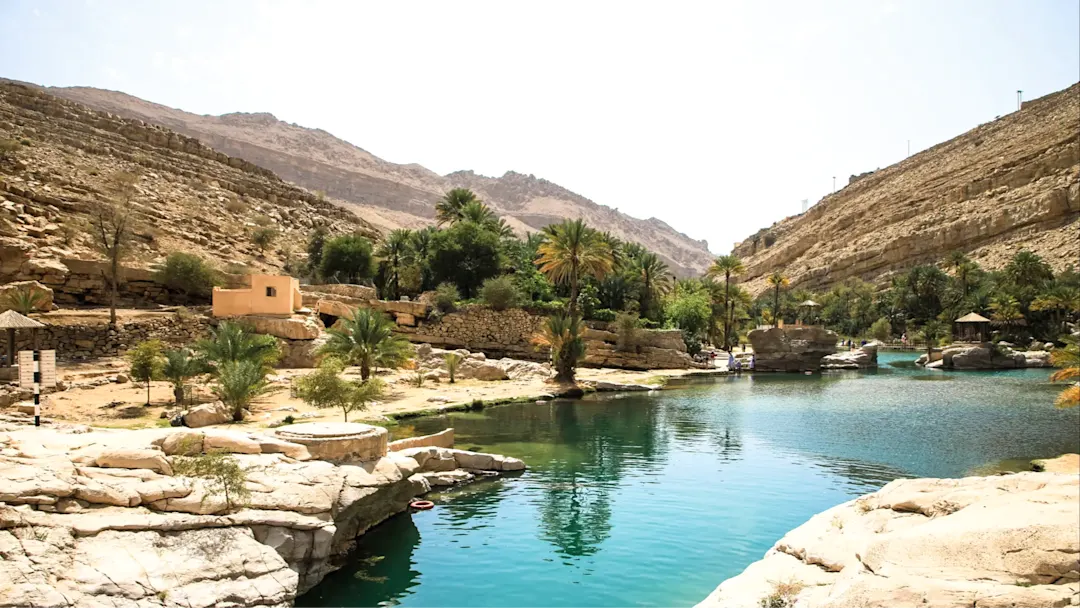
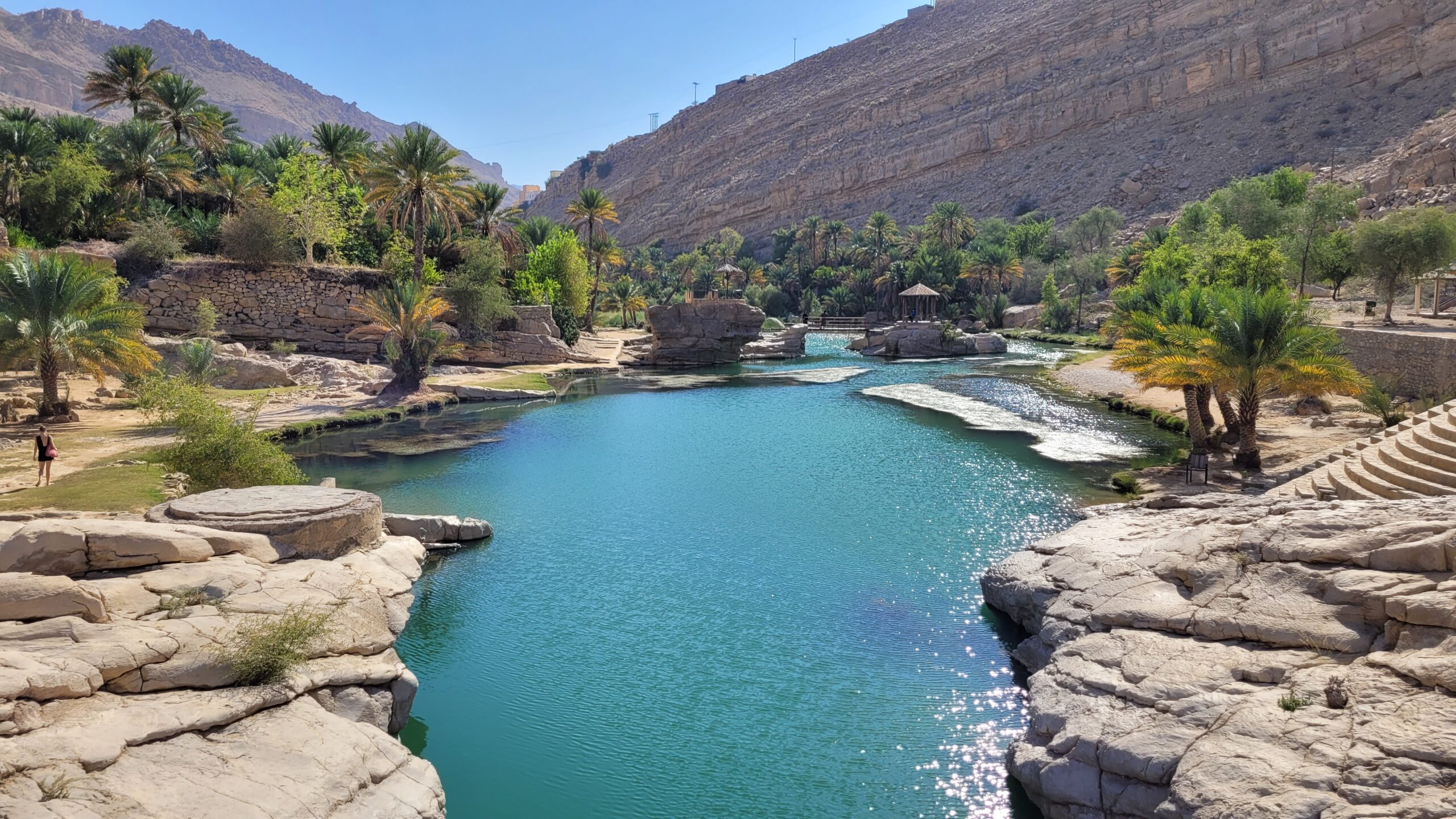
Perhaps the most celebrated oasis in Oman, Wadi Bani Khalid maintains a steady flow of water all year round. Deep, turquoise pools are carved into white limestone, shaded by swaying date palms. It is a striking visual paradox: a lush, aquatic paradise surrounded by arid, sun-scorched peaks.

Dhofar Region (The South)
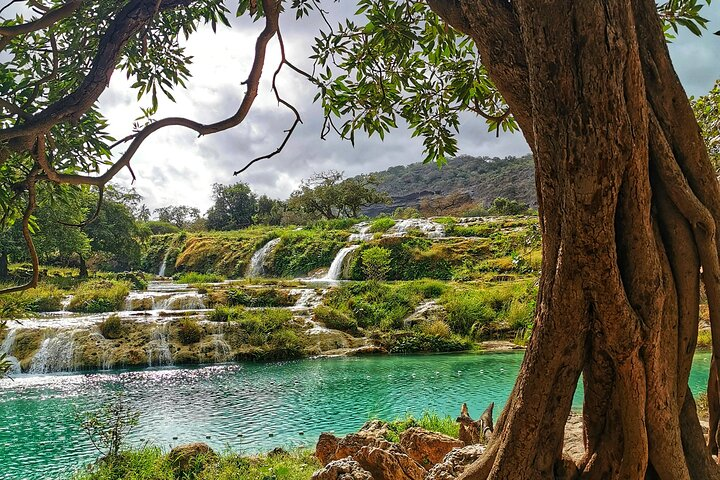
Unlike the rugged north, the southern Dhofar region transforms during the Khareef (monsoon season). The mist rolls in, transforming the entire landscape into an astonishingly green, tropical oasis unlike anything else on the Arabian Peninsula.
Salalah Oasis
The capital of the south is synonymous with frankincense. The Salalah oasis stretches along the coastline, where coconut palms, papaya trees, and banana plantations thrive. The air here carries the sweet, resinous scent of incense, blending with the ocean breeze.

Taqah Oasis
A sleepy coastal town enveloped by a magnificent oasis, Taqah is framed by towering limestone cliffs and the endless blue of the Arabian Sea. Historic forts watch over pristine natural springs that run down to white-sand beaches, creating a serene, end-of-the-world tranquility.


Finding Presence
You don’t travel to Oman’s oases to find distraction. You travel to find a sense of proportion. In a desert where every drop counts, you remember that you, too, belong to a delicate, ancient balance.
Ready for the Journey?
Swim in turquoise pools, hike ancient canyons, and discover the hidden soul of Oman with our expert guides.